The honest truth about feeders: the type you pick matters more than the brand, and how often you clean it matters more than either. So this page ranks feeder types, using what Cornell's feeder guide says, rather than naming a "best" model we have not held in our hands. We do not list prices or star ratings here, and we do not have an affiliate relationship with any feeder maker.
At a glance
| Feeder type | Good for | Birds Cornell lists | Watch out for |
|---|---|---|---|
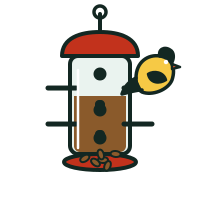 Tube feeder | Most beginners; small songbirds | Chickadees, finches, titmice, nuthatches and more, depending on port and perch size | Squirrels can chew plastic tubes; needs regular cleaning because birds share perches |
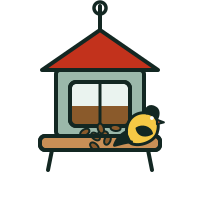 Hopper ("house") feeder | Holding a lot of seed; roofed shelter | Finches, jays, cardinals, buntings, grosbeaks, sparrows, chickadees, titmice | Harder to clean than a tray; most designs are easy for squirrels |
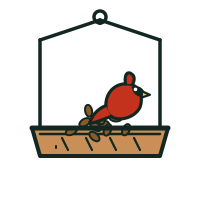 Tray / platform feeder | Widest variety of seed-eaters; ground feeders | Grosbeaks, sparrows, juncos, towhees, jays, blackbirds, doves, quail | No rain protection; droppings soil seed; attracts squirrels and pushy species |
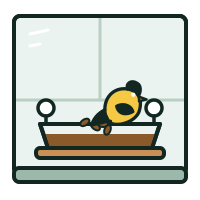 Window feeder | Close-up views; apartments | Finches, chickadees, titmice, nuthatches, sparrows | Tray gets soiled; suction cups can be fiddly; birds may take days to trust it |
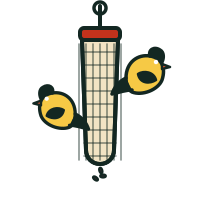 Nyjer (thistle) feeder | A second feeder for small finches | Goldfinches, Pine Siskins, redpolls, Indigo Buntings | Fewer species visit; nyjer costs more than other seed |
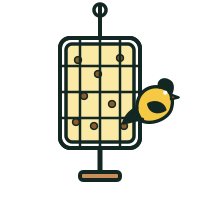 Suet feeder | Insect-eaters; cool weather | Woodpeckers, nuthatches, chickadees, titmice, starlings, jays | Gets soft above about 90°F (32°C); stop offering it in hot months |
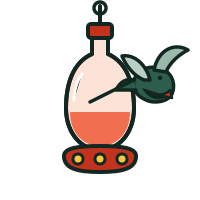 Hummingbird feeder | Small spaces; no yard needed | Hummingbirds; sometimes orioles | Nectar spoils fast; attracts ants and wasps |
Source for every row: Cornell Lab of Ornithology, How to choose the right kind of bird feeder (updated August 2024).
Your first feeder: a tube feeder
Cornell says most seed feeders are variations on a few basic designs, and that hanging a tube feeder from a tree branch or shepherd's crook is an easy way to get started. Tube feeders keep seed out of the weather, birds cannot foul seed with their droppings the way they can on a tray, and different port and perch sizes let you aim at smaller or larger birds.
Watch out for: plastic tubes can be gnawed wider by squirrels (metal tubes are more resistant), and birds that share perches can pass disease, so Cornell recommends cleaning tube feeders regularly. Cornell also advises blocking the part of the tube below the lowest feeding port, where seed sits out of reach and can go moldy.
Your second feeder: pick based on the birds you want
- Want finches, close up: a small nyjer feeder. Cornell suggests starting with a small one and adding only a little seed until you see how popular it is.
- Want cardinals, jays, doves, sparrows: a tray or hopper feeder. A tray gives the widest variety of seed-eaters; a hopper adds a roof. Cornell suggests a tray with a screened (not solid) bottom for drainage.
- Want woodpeckers and nuthatches: a suet feeder. Cornell notes that designs that face the suet cake downward make birds hang upside-down, which favors agile birds like woodpeckers and nuthatches over starlings and jays.
- Live in an apartment, or want a front-row seat: a window feeder. Cornell says birds see it before they reach the glass, which helps keep them safe from collisions.
- Want hummingbirds: a nectar feeder. Put it up early in the season so migrants can find it. Cornell says there is no need for red food coloring; red parts on the feeder are enough.
What to look for in a specific model
Once you have picked a type, Cornell says choosing a model "comes down to construction, squirrel-proofing, and of course aesthetics." Its description of the ideal feeder is a good shopping checklist: sturdy enough for winter weather and squirrels, tight enough to keep seeds dry, easy to assemble and, most important of all, easy to keep clean. If you cannot take a feeder apart in under a minute, you will clean it less often.
Where to put it
Per Cornell's placement guide:
- Closer to a window is safer. Within about 3 feet of a picture window, or attached to the glass or frame, so a bird leaving the feeder cannot build up speed before it hits the pane.
- Near cover, but not too near. Trees and shrubs give birds a place to rest and a refuge from hawks. Branches too close become launch pads for squirrels and hiding spots for cats. Cornell says about 10 feet is a good compromise, and encourages experimenting.
- Be patient. If nothing shows up within a few days, Cornell suggests sprinkling some seed on the ground nearby to make the feeder easier to spot.
- Hummingbird feeders: out of the wind and mostly in shade, because nectar spoils quickly in sun.
Keep it clean (this is the part people skip)
Cornell's cleaning guide says moldy seed and droppings can make birds sick, and recommends:
- Seed feeders: clean about every two weeks, and more often in heavy use or wet weather, or if you see sick birds. Take it apart, then run it through a hot dishwasher cycle or wash with soap and boiling water, or a dilute bleach solution (no more than 1 part bleach to 9 parts water). Rinse thoroughly and dry before refilling. Clean the ground underneath too.
- Hummingbird feeders: change the sugar water at least every 3 to 5 days (more often in hot weather) and clean at least weekly with hot water and a bottle brush, no soap. The Smithsonian's National Zoo nectar page says to change it every other day, so in hot weather, err toward the shorter interval. The Smithsonian and Project FeederWatch both give the same recipe: 1 part sugar to 4 parts water.
What to put in it
Cornell says to start with black-oil sunflower: it is the most widely used seed and attracts the largest range of species. Read our bird seed guide for what to add next, and what to avoid in cheap mixes.
Want a camera on it?
Camera feeders can be a fun way to watch birds while you are away from the window, but they cost more and bring app and subscription considerations. We compare the main options in our smart bird feeder guide.
Our starter setup, in one list
- One tube feeder with black-oil sunflower seed, on a pole or hook with a squirrel baffle.
- Placed about 10 feet from cover, or within 3 feet of a window.
- A calendar reminder to clean it every two weeks.
- After a few weeks: add a nyjer feeder, a suet cage or a tray, depending on who is visiting.
Buying a feeder as a gift? See our beginner gift guide. Going deeper into birding? Pair your feeder with a good pair of binoculars and an ID app from our app comparison. Prefer a scope for the far side of the yard? See our spotting-scope guide.
Sources, all checked October 25, 2026 (America/New_York): Cornell: choosing a feeder; Cornell: where to put it; Cornell: cleaning; Project FeederWatch: food types; Smithsonian's National Zoo: nectar. We have not tested any specific feeder model.